
Restoring Florida's Springs
Crystal-clear springs are essential warm-water refuges for manatees and crown jewels of Florida's natural heritage. The Rodman Dam disrupts their natural function.
The Springs Crisis
Florida's springs were once world-famous—crystal-clear waters so pure you could see straight to the bottom, teeming with fish and visited by hundreds of manatees seeking warmth in winter. Today, many springs are shadows of their former selves.
Silver Springs, once one of Florida's crown jewels and a major tourist destination, has experienced dramatic flow declines. The connection between the Ocklawaha River and the Silver River/Silver Springs complex has been disrupted by Rodman Dam.
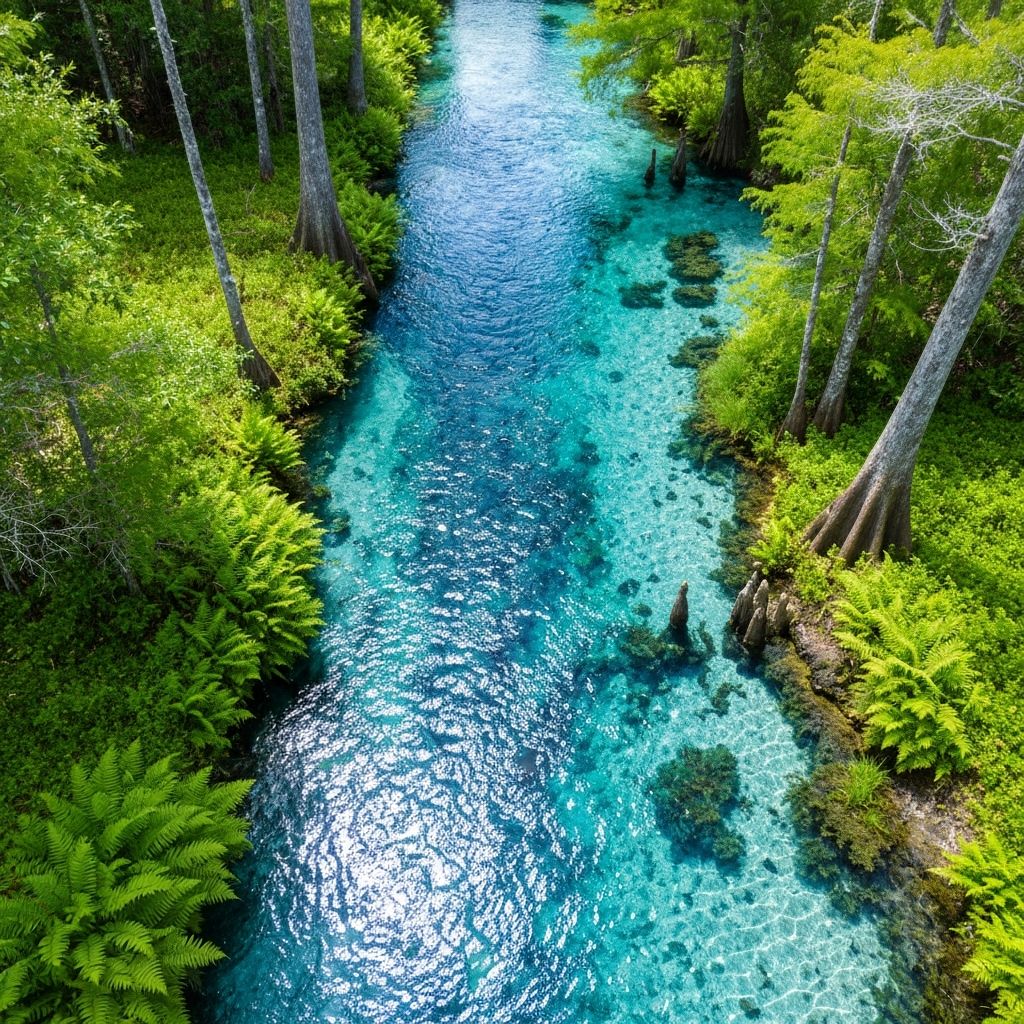
Why Springs Matter for Manatees
Springs provide year-round warm water (72°F) that manatees depend on for winter survival. Without access to warm-water refuges, manatees can die from cold stress. Connecting the Ocklawaha to the Silver Springs system would expand critical manatee habitat.
Understanding Spring Hydrology
How the dam suppresses springs and what restoration can achieve
The Hydraulic Gradient
Higher surface water = Lower gradient = Reduced spring flow
When Rodman Dam artificially raises the Ocklawaha River's surface elevation, it reduces the pressure difference that drives spring discharge. This can suppress or even reverse spring flows in some locations.
Evidence from Drawdowns
During drawdown periods (when the reservoir is lowered for vegetation management), spring discharge increases. This demonstrates that removing the dam's influence on surface water elevation can restore more natural spring function.
While opponents claim "spring flows won't increase," the evidence from drawdowns contradicts this. The goal isn't instant transformation—it's long-term restoration of natural hydraulic gradients.
Silver Springs Connection
Restoring the Ocklawaha would reconnect this critical pathway, expand manatee habitat, and support the recovery of one of Florida's most iconic spring systems.
Springs: Myth vs. Fact
Addressing common misconceptions about springs restoration
Myth: "Springs don't matter"
Some opponents dismiss springs as irrelevant to the dam debate. This ignores the fundamental role springs play as warm-water refuges for manatees and as ecological anchors for river health.
Fact: Florida's springs are essential manatee habitat. On January 1, 2026, Blue Spring State Park counted 697 manatees—demonstrating how critical accessible warm-water refuges are for survival. Restoring Ocklawaha connectivity would expand this vital network.
Myth: "The dam is needed to recharge the aquifer and support springs"
This claim reverses cause and effect. Florida's aquifer is recharged by rainfall across the entire watershed. A reservoir with compacted sediment on its floor may actually reduce infiltration compared to a natural river with permeable channels and karst features.
Fact: Natural rivers support aquifer recharge through distributed percolation. The dam artificially elevates surface water, which can suppress spring discharge—the opposite of helping springs.
Myth: "Spring flows won't increase if the dam is removed"
This claim ignores evidence from drawdown periods when lowering the reservoir increases spring discharge. While restoration won't produce instant results, the long-term trajectory favors natural spring function over managed suppression.
Fact: Restoration is about long-term recovery, not quarterly metrics. Allowing natural hydrology to reassert itself gives springs the best chance for sustained recovery.
Silver Springs: A Recovery Opportunity
Restoring connectivity could help reverse decades of decline
Silver Springs was once Florida's premier natural attraction—a crystal-clear window into the aquifer with flows that supported glass-bottom boat tours and attracted visitors worldwide. Today, flow has declined significantly, algae blooms are common, and the spring's ecological health has diminished.
The Silver River connects this spring system to the Ocklawaha. Before Rodman Dam, manatees could travel freely between the St. Johns River and Silver Springs, using the warm water as a critical winter refuge. The dam broke that connection.
Restoring the Ocklawaha would not solve all of Silver Springs' problems—water quality and over-pumping also need attention—but it would remove one major barrier to recovery and reconnect an essential piece of Florida's natural heritage.
Note: Spring restoration is a long-term process requiring watershed-scale solutions. Dam removal is one critical step in a larger conservation strategy.
Restore Our Springs
Florida's springs are irreplaceable. Help restore connectivity and give these natural treasures a chance to recover.
Want to verify these claims? View our sources and references