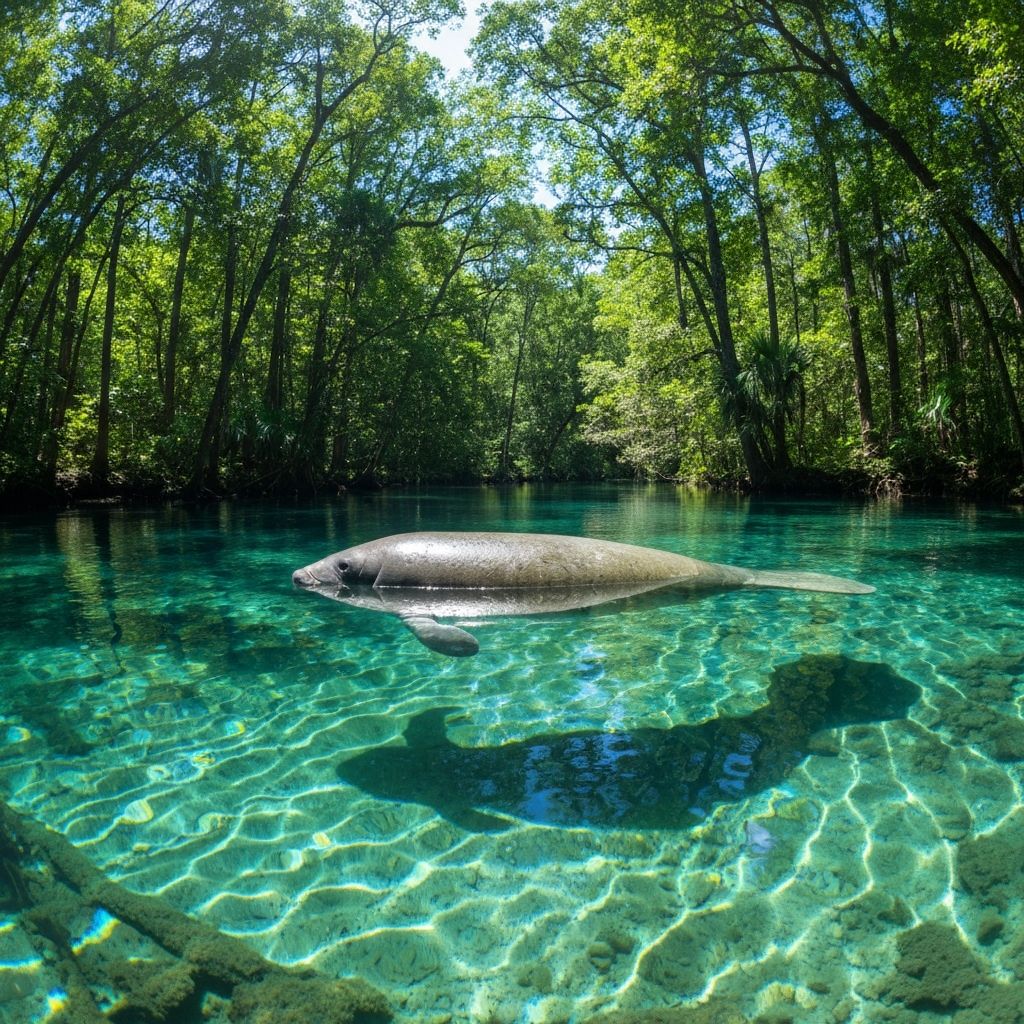
Manatees Need Natural Habitat
Hundreds of manatees have died in recent years due to habitat loss. Removing Rodman Dam would restore critical warm-water refuges and natural food sources in a connected river-spring system.
The Manatee Crisis
Florida's manatees are facing unprecedented challenges. Over 1,000 manatees died in 2021 alone, with hundreds more in subsequent years. The primary cause: loss of seagrass beds and warm-water refuges that manatees depend on for survival.
Manatees need two critical elements to thrive: warm-water refuges during winter months and abundant food sources like seagrass throughout the year. The Ocklawaha River basin, with its connection to Silver Springs and other natural springs, historically provided both.
The question isn't whether Rodman Reservoir can support some manatees—it's whether we should force them to rely on an artificial, managed impoundment when we could restore an entire connected river-spring ecosystem.
Why Springs Matter
On January 1, 2026, Blue Spring State Park counted 697 manatees seeking warm-water refuge in a single spring. This demonstrates how critical accessible warm-water refuges are for manatee survival during winter months.
Restoring the Ocklawaha's connection to Silver Springs and other warm-water refuges would expand this critical habitat network, giving manatees more options and reducing crowding at limited sites.
Documented Manatee Harm at Dam/Lock Systems
Multiple verified and undetermined manatee mortalities have been documented in the vicinity of the Buckman Lock and Rodman Reservoir area. A University of Florida-hosted report cites carcass damage consistent with trauma from the Rodman Reservoir and Buckman Lock structural mechanisms.
According to the Marine Mammal Commission's Florida springs and manatee report, "the dam and lock systems have been responsible for manatee mortality." The report explicitly notes that removal would eliminate the only known source of water-control-structure mortality in the St. Johns River system.
This isn't speculation—these are documented deaths caused by infrastructure that restoration would remove. When we talk about "saving manatees," this is exactly what we mean: eliminating known mortality sources and restoring safe passage through natural river corridors.
Myth vs. Fact
Separating claims from evidence about manatees and Rodman Dam
Myth: "Manatees never used the Ocklawaha before 1960"
This claim lacks credible, published evidence. The absence of manatee mentions in early travel writings is not proof they weren't present. Historical documentation focused on navigation and commerce, not wildlife surveys.
Myth: "Rodman is an essential manatee sanctuary with abundant food"
While some manatees do use Rodman Reservoir, large lake surface area doesn't equal quality manatee habitat. The reservoir requires active management including water-level drawdowns, vegetation control, and herbicide applications.
Fact: Manatees thrive in connected habitat systems with reliable warm-water refuges (springs) and natural food sources. A free-flowing Ocklawaha would provide safe passage between the St. Johns River, Silver River, and Silver Springs complex.
Myth: "Lock and dam systems are safe for manatees"
Relying on a lock and dam infrastructure as a "manatee sanctuary" raises serious safety concerns. Lock operations and dam structures pose risks to wildlife, and the system requires constant human management.
Fact: Natural river systems allow manatees to move freely without navigating dangerous infrastructure. Why force them into a managed pseudo-haven when we can restore an entire connected ecosystem?
A Connected System, Not an Isolated Lake
The key to manatee recovery isn't managing an artificial reservoir—it's restoring natural connectivity. The Ocklawaha River historically linked the St. Johns River to the Silver River and Silver Springs complex, creating a resilient network of warm-water refuges and feeding grounds.
Removing Rodman Dam would restore this connection, allowing manatees to move naturally between habitats based on water temperature, food availability, and seasonal needs. This is how healthy manatee populations survive—not by depending on a single managed impoundment.
What About Short-Term Impacts?
Restoration is a phased process with monitoring and adaptive management. While transitions can be challenging, the long-term benefits of a self-maintaining river-spring ecosystem far outweigh the risks of depending on an aging, artificial infrastructure that requires constant intervention.
Help Save Florida's Manatees
Natural habitat restoration is the best path forward for manatee recovery. Join us in calling for the removal of Rodman Dam and restoration of the Ocklawaha River.
Want to verify these claims? View our sources and references